Introduction
When it comes to healthcare, there is no single approach that fits every situation.
Conventional Medicine is essential for diagnosing and treating diseases, managing acute conditions, and providing evidence-based medical care. Functional Medicine, on the other hand, places additional emphasis on understanding the lifestyle, nutritional, metabolic, and environmental factors that may be contributing to a person’s health concerns.
Rather than choosing one over the other, understanding how these approaches differ can help you make more informed decisions about your health.
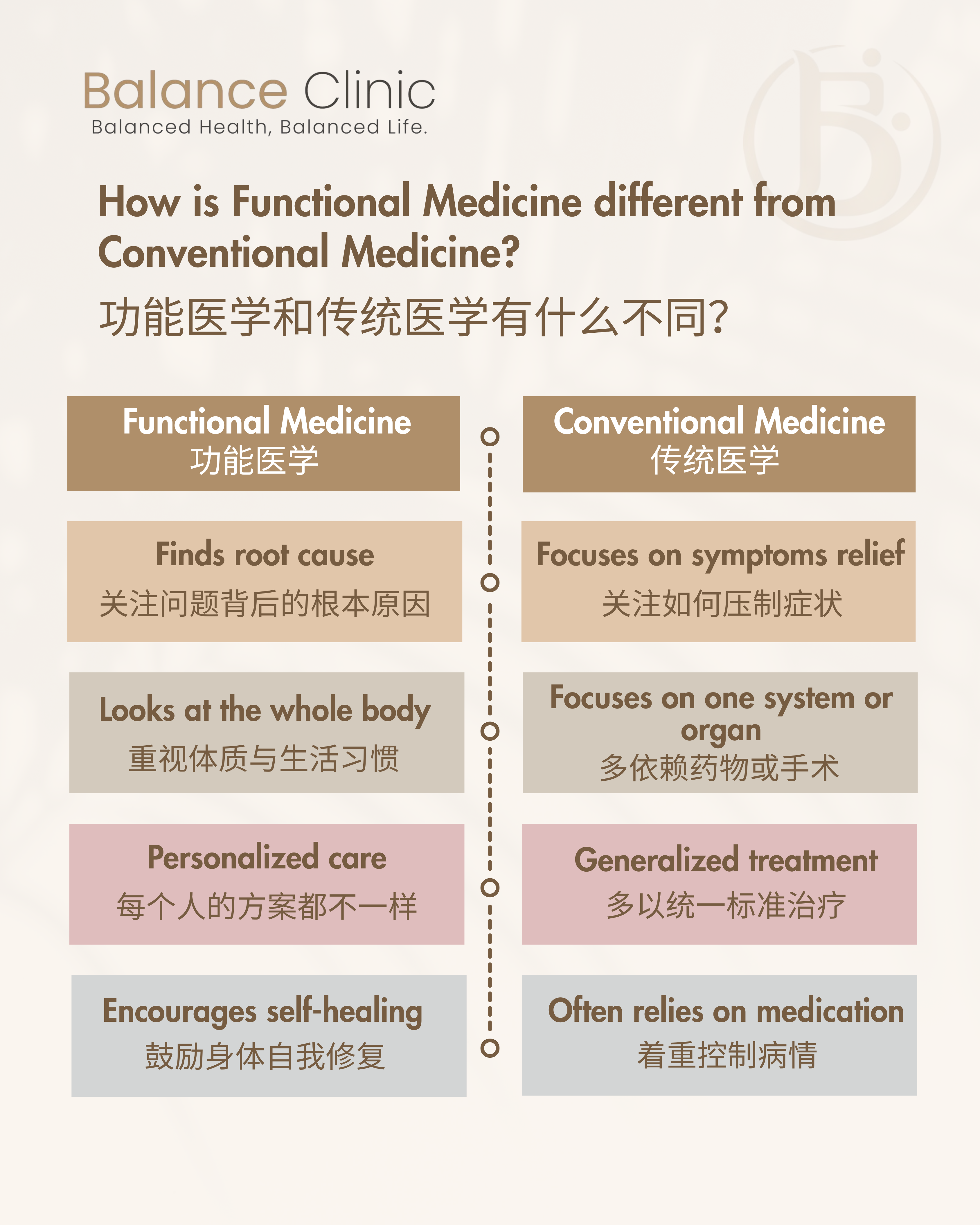
How Is Functional Medicine Different
from Conventional Medicine?
Both approaches aim to improve health, but they may look at a patient from different perspectives.
1. Looking for Contributing Factors
Functional Medicine often asks:
“What factors may be contributing to this problem?”
This may involve looking at nutrition, sleep, stress, physical activity, metabolic health, gut health, hormones, and other lifestyle factors alongside medical findings.
Conventional Medicine focuses strongly on diagnosing diseases, controlling symptoms, preventing complications, and providing appropriate medical treatment.
2. Looking at the Body as a Whole
Functional Medicine considers how different systems in the body may influence one another.
For example, fatigue may not always relate to just one factor. Sleep quality, nutritional status, stress, hormones, metabolism, and other health conditions may all need to be considered.
3. Personalised Care
While clinical guidelines remain important, Functional Medicine places additional emphasis on tailoring lifestyle and nutritional strategies to the individual.
Two people with similar symptoms may have different contributing factors — and therefore may benefit from different approaches.
4. Long-Term Health Management
Functional Medicine often places strong emphasis on lifestyle modification, prevention, nutrition, exercise, sleep, and other habits that may support long-term health alongside appropriate medical care.
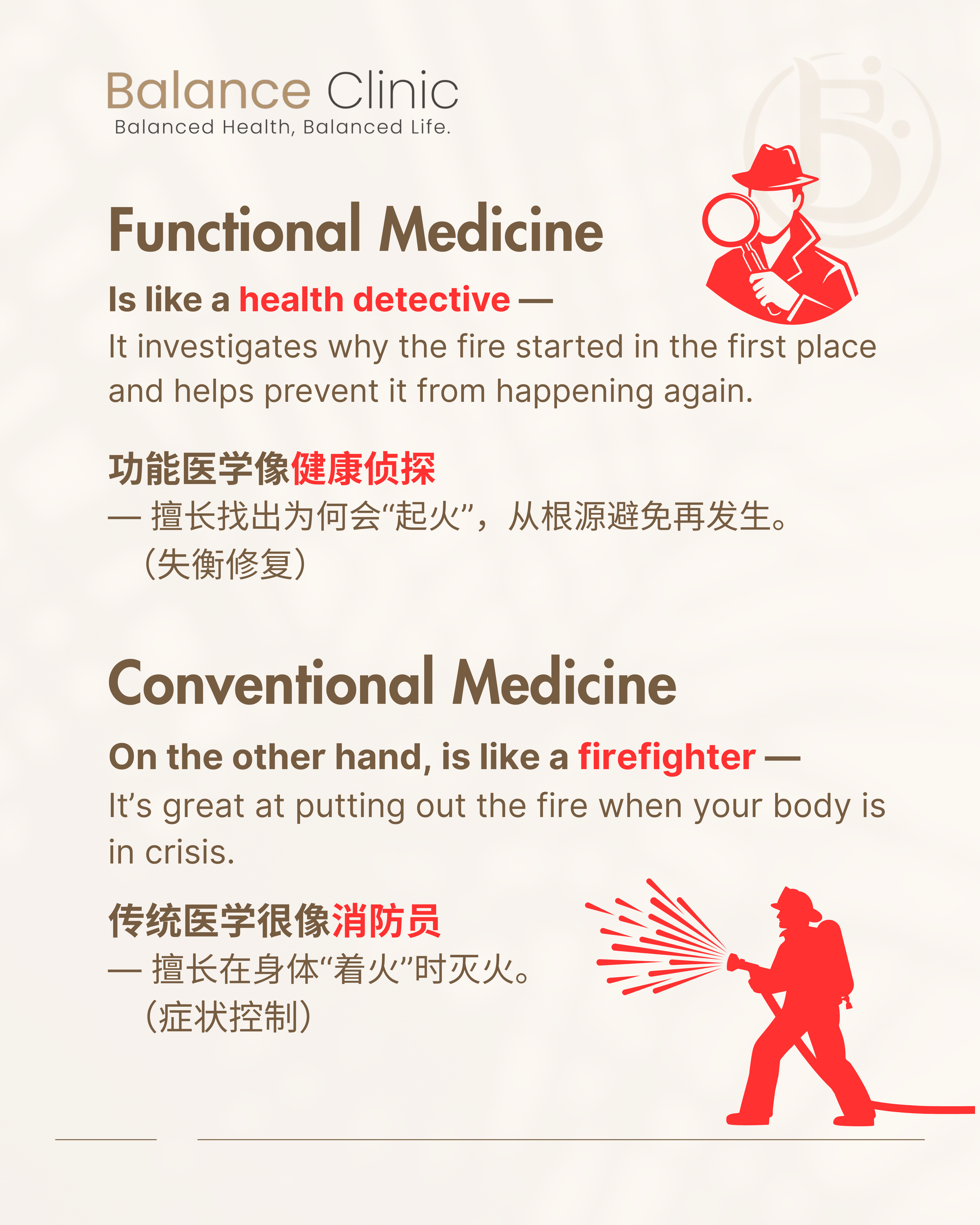
Think of It as a Health Investigation
A simple way to understand Functional Medicine is to think of it as being a health detective.
Instead of stopping at “What symptom are you experiencing?”, it also asks:
This deeper investigation may help uncover patterns that are not obvious when looking at one symptom or test result alone.
At the same time, Conventional Medicine remains especially important when someone requires urgent care, medication, surgery, disease treatment, or ongoing medical monitoring.
The two approaches do not have to compete — they can complement one another.
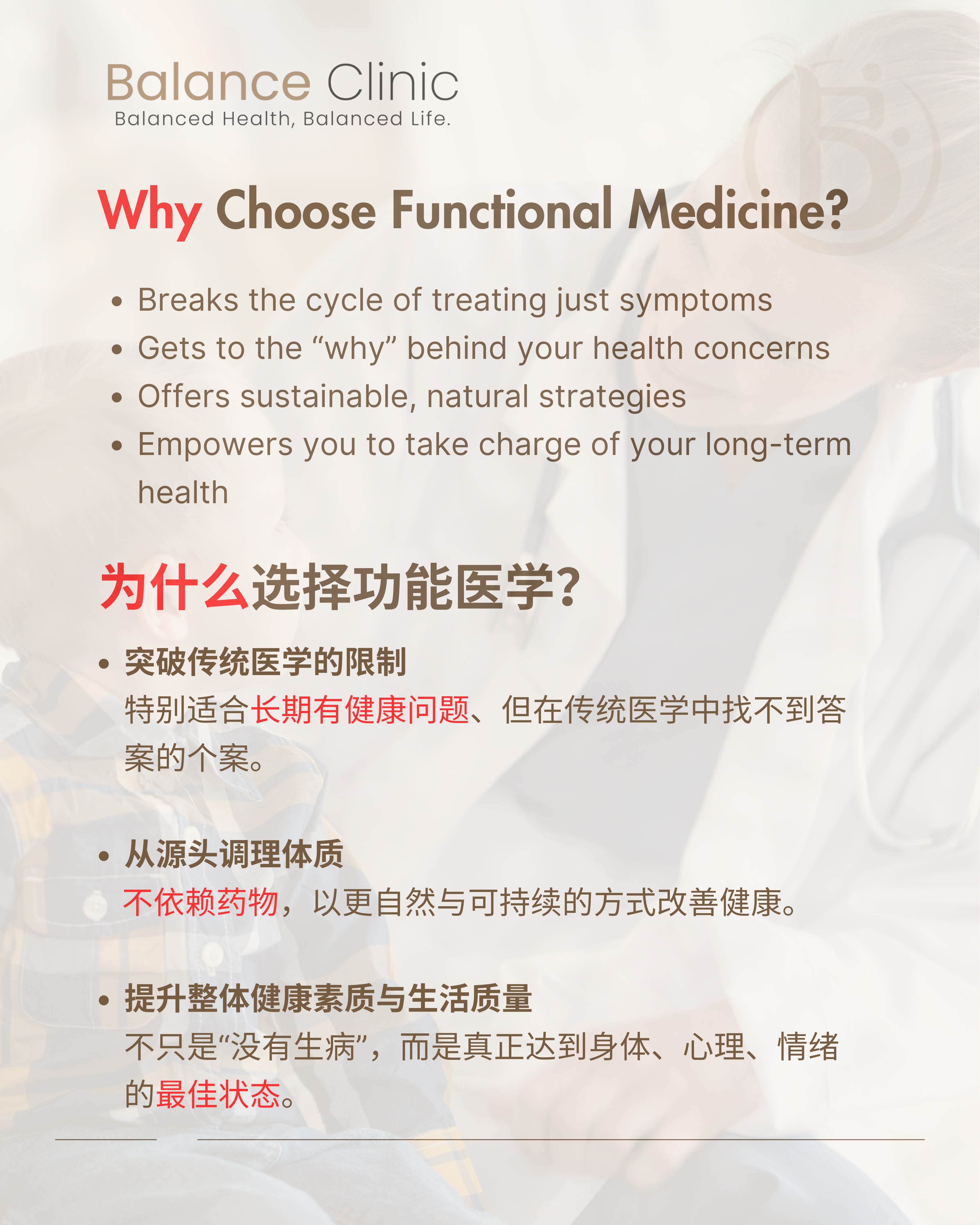
Why Consider a Functional Medicine Approach?
Functional Medicine may be particularly useful when you want to understand your health in greater depth or make sustainable lifestyle changes.
1. Understand the “Why”
Instead of focusing only on what you are feeling, it explores the factors that may be contributing to those symptoms.
2. Build Healthier Daily Habits
Nutrition, movement, sleep, stress management, and other lifestyle factors are often incorporated into the health plan.
3. Take a More Active Role in Your Health
Understanding your own health data and lifestyle patterns can help you make more informed choices about your wellbeing.
4. Focus on Long-Term Health
The aim is not simply to feel better today, but to build habits and strategies that support health over time.
Functional Medicine should not be viewed as a replacement for necessary medical treatment. Instead, it can provide an additional framework for understanding and managing health more comprehensively.
Why More People Are Exploring Functional Medicine
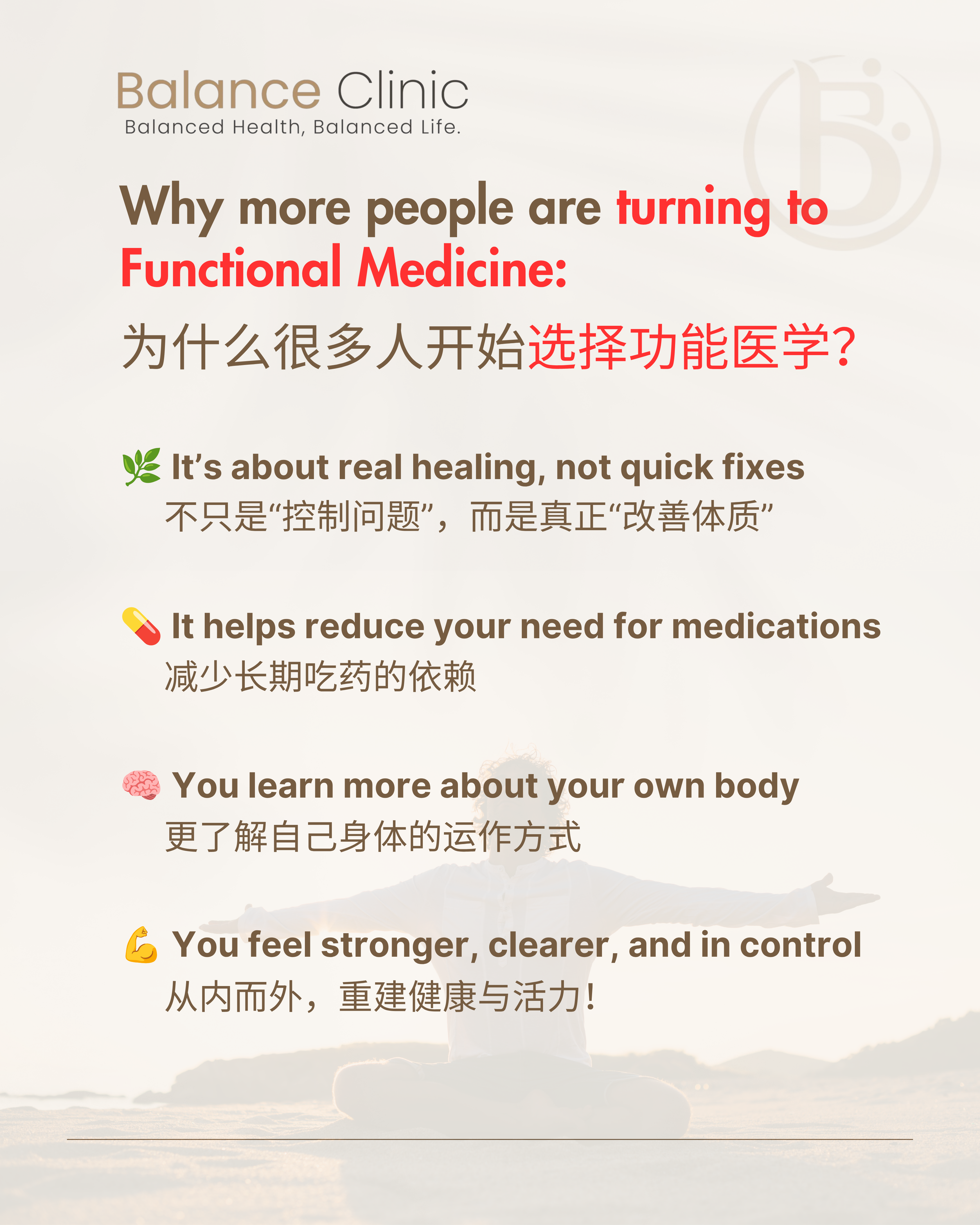
Today, many people want more than a quick explanation of their symptoms. They want to understand how their lifestyle, nutrition, stress, metabolism, and overall health may be connected.
A Functional Medicine approach can help people:
The goal is not to avoid medication when it is needed, but to also address the lifestyle and health factors that may support better overall outcomes.
The Balance Clinic Approach
At Balance Clinic, we combine medical assessment with a broader understanding of your overall health.
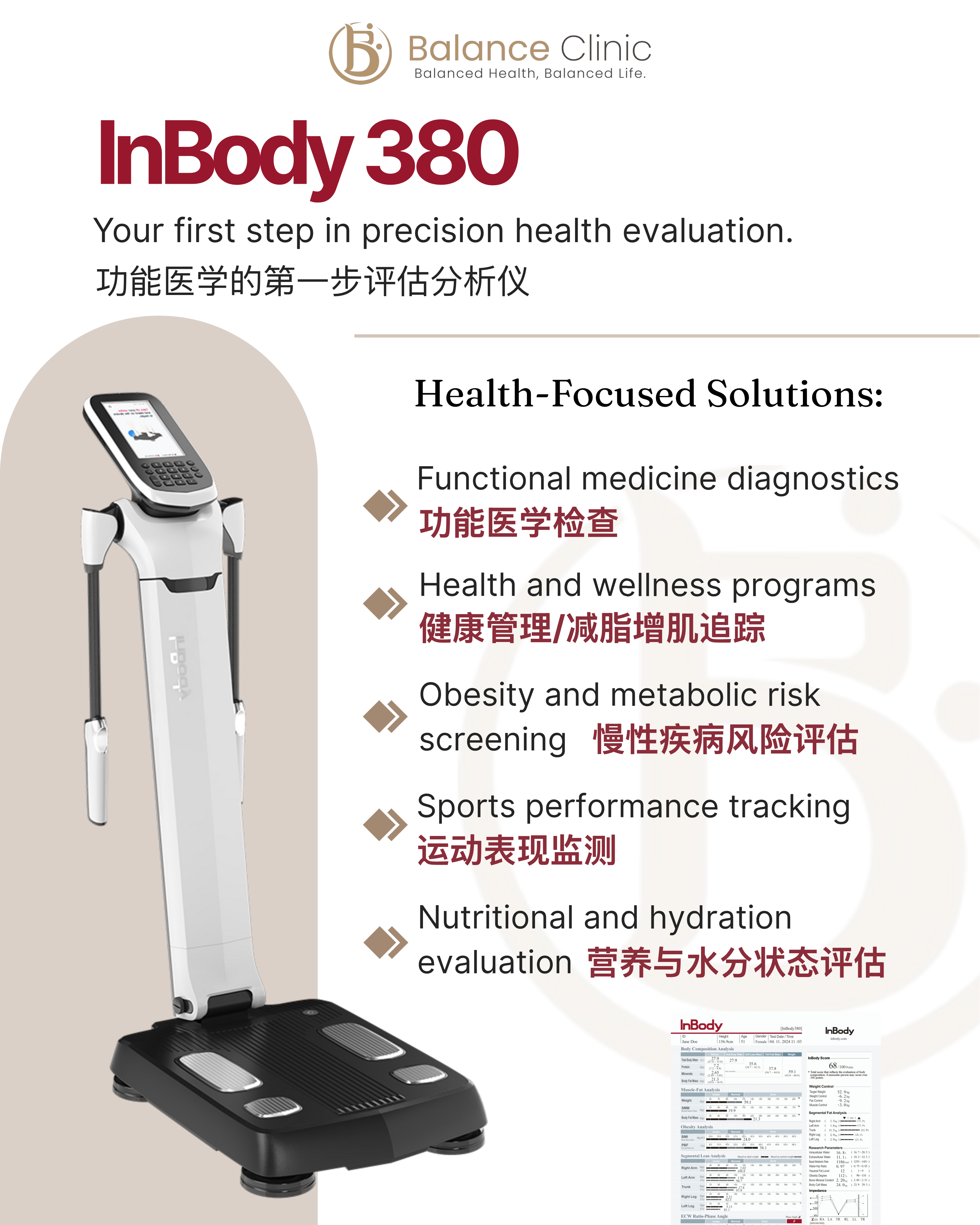
Our approach may include a detailed consultation, relevant laboratory testing, body composition assessment, nutritional evaluation, and discussion of your sleep, stress, lifestyle, diet, and health history.
From there, our doctors and healthcare team can identify areas that may need attention and develop a more personalised health plan.
Where medication or conventional medical treatment is necessary, it remains an important part of care. At the same time, we also look at the lifestyle and nutritional factors that can support your health in the long term.
It is not about choosing Functional Medicine or Conventional Medicine — it is about using the right approach for the right person at the right time.
Final Thoughts
Functional Medicine and Conventional Medicine are not necessarily opposites.
Conventional Medicine plays a vital role in diagnosing and treating disease, while Functional Medicine can add another layer by exploring the broader factors that influence how your body functions.
By combining appropriate medical care with personalised nutrition, lifestyle strategies, and ongoing health monitoring, you can gain a more complete understanding of your health.
Understand the condition. Understand the person. Build better health from there.