Introduction
Your body often gives you signals before a health problem becomes more obvious.
Persistent fatigue, poor sleep, bloating, mood changes, digestive discomfort, skin problems, or hormonal changes may seem unrelated, but sometimes they are signs that your body needs more attention.
One occasional symptom may not mean something is wrong. But when the same concerns keep returning, last for a long time, or begin affecting your daily life, it may be worth looking deeper.
Are You Experiencing These Symptoms?
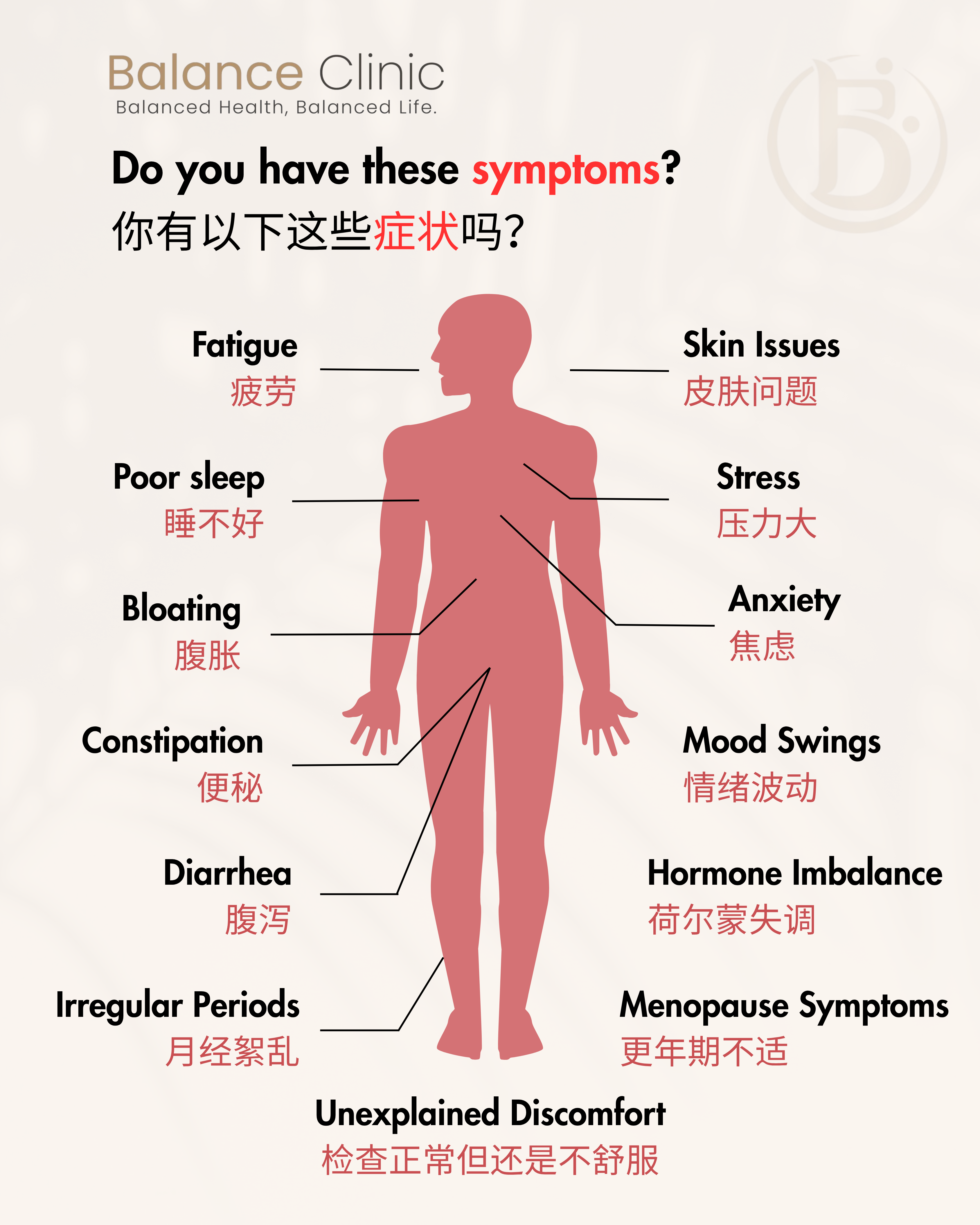
Some common symptoms people experience today include:
1. Fatigue & Poor Sleep
Feeling tired despite adequate rest, waking up unrefreshed, or struggling with sleep can affect concentration, mood, metabolism, and overall quality of life.
2. Digestive Changes
Frequent bloating, constipation, diarrhoea, or abdominal discomfort may be related to diet, gut function, stress, food tolerance, medications, or other digestive conditions.
3. Stress, Anxiety & Mood Changes
Mental and physical health are closely connected. Chronic stress may influence sleep, digestion, appetite, energy levels, and emotional wellbeing.
4. Skin Concerns
Recurring breakouts, irritation, dryness, or other skin changes may have several contributing factors, including hormones, nutrition, stress, environment, and underlying skin conditions.
5. Hormonal & Menstrual Changes
Irregular periods, PMS symptoms, menopausal changes, or other hormonal concerns may deserve further assessment, especially when they are persistent or significantly affect daily life.
6. Unexplained Discomfort
Sometimes tests appear normal, but you still do not feel like yourself. This does not mean the symptoms should be dismissed — it may mean that a broader assessment is needed.
When Symptoms Keep Coming Back
A symptom is your body’s way of telling you that something has changed.
Persistent symptoms do not automatically mean that chronic disease will develop, but they should not simply be ignored — especially when they are recurring, worsening, or affecting daily activities.
Instead of repeatedly asking only:
“How do I stop this symptom?”
it may also be useful to ask:
“What factors could be contributing to it?”
Possible influences may include nutrition, sleep, stress, hormonal changes, metabolic health, gut function, medications, lifestyle habits, or an underlying medical condition.
Recognising patterns early gives you an opportunity to investigate and respond appropriately.
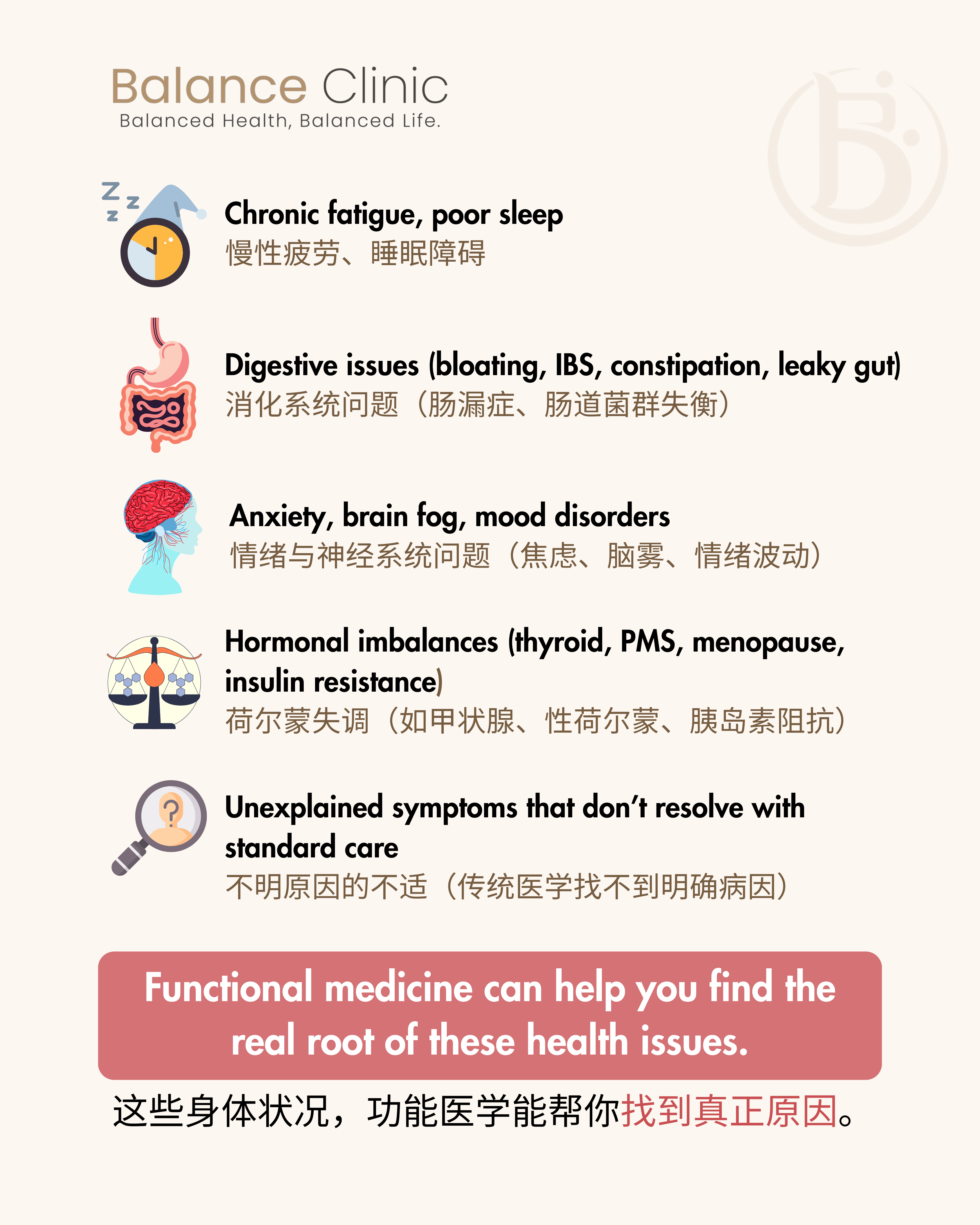
Common Areas That May Need a Closer Look
Chronic Fatigue & Sleep Problems
Ongoing tiredness may have many possible causes — from inadequate sleep and stress to anaemia, nutrient deficiencies, thyroid conditions, metabolic issues, or other medical problems.
Digestive Concerns
Bloating, constipation, diarrhoea, or IBS-like symptoms may require a closer look at eating habits, fibre intake, food triggers, gut health, stress, and possible gastrointestinal conditions.
Brain Fog, Anxiety & Mood Changes
Poor concentration and mood changes can be influenced by sleep, chronic stress, nutrition, hormones, medications, mental health conditions, and physical health.
Hormonal & Metabolic Changes
Symptoms associated with menstruation, menopause, thyroid function, or insulin resistance may overlap. Appropriate testing and medical assessment can help determine what is actually happening.
Symptoms Without a Clear Explanation
When symptoms continue despite an initial assessment, looking at the pattern, timeline, lifestyle, nutrition, and relevant health markers together may provide additional information.
The important point is not to assume every symptom has one “root cause,” but to investigate the possible contributing factors carefully.
The Balance Clinic Approach
At Balance Clinic, we believe recurring symptoms deserve to be understood in context.
Rather than looking at one complaint in isolation, our approach may include:
Where necessary, conventional medical diagnosis and treatment remain an important part of care.
Our goal is to connect the information, identify areas that may need attention, and help you take practical steps towards better health.
Your symptoms are information — understanding them is the first step.
Final Thoughts
It is normal to feel tired, bloated, stressed, or uncomfortable occasionally.
But when these symptoms become persistent, recurrent, or begin interfering with your quality of life, they deserve attention rather than being accepted as “normal.”
Listening to your body does not mean assuming the worst. It means noticing changes, seeking appropriate assessment, and understanding what may be contributing to how you feel.
Don’t ignore the pattern. Understand the signals. Give your body the support it needs.