Your Metabolism May Be Thirsty

Introduction

Hydration Is More Than Just Drinking Water

Water is essential for almost every system in the body. From supporting circulation and digestion to maintaining energy, concentration, temperature regulation, and normal metabolic processes, proper hydration plays an important role in how we feel and function every day.


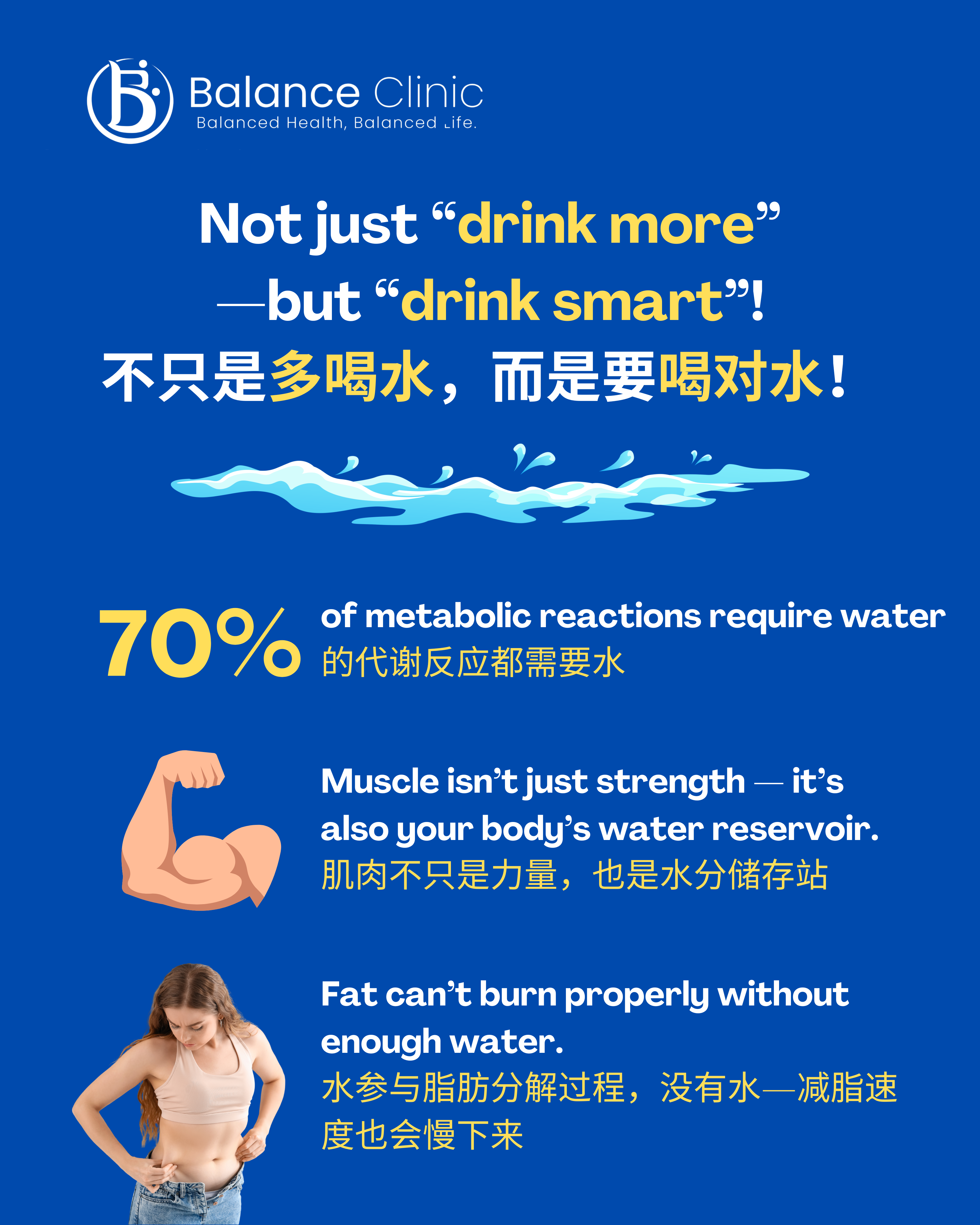
But hydration is not simply about drinking as much water as possible.

How much you need, when you drink, and your individual health needs all matter.


So, have you had enough water today?

Why Hydration Matters for Metabolism

Water is involved in many of the chemical reactions that keep the body functioning.

When fluid intake is inadequate, even everyday processes may not work as efficiently.

Key roles of hydration include:

1. Supports normal metabolism
Water is needed for many biochemical processes involved in producing and using energy.


2. Supports muscle function
Muscle tissue contains a large amount of water, so staying hydrated is important for normal
muscle performance and recovery.


3. Supports circulation
Adequate fluid helps maintain blood volume, allowing oxygen and nutrients to be transported throughout the body.


4. Supports fat metabolism
Water participates in metabolic processes involved in the breakdown and utilisation of stored energy. Hydration supports this process, 
although drinking more water alone does not directly “burn fat.”


The key is not simply to drink more, but to maintain adequate hydration consistently throughout the day.

Hydration, Digestion & Mental Focus

Proper hydration affects much more than thirst.


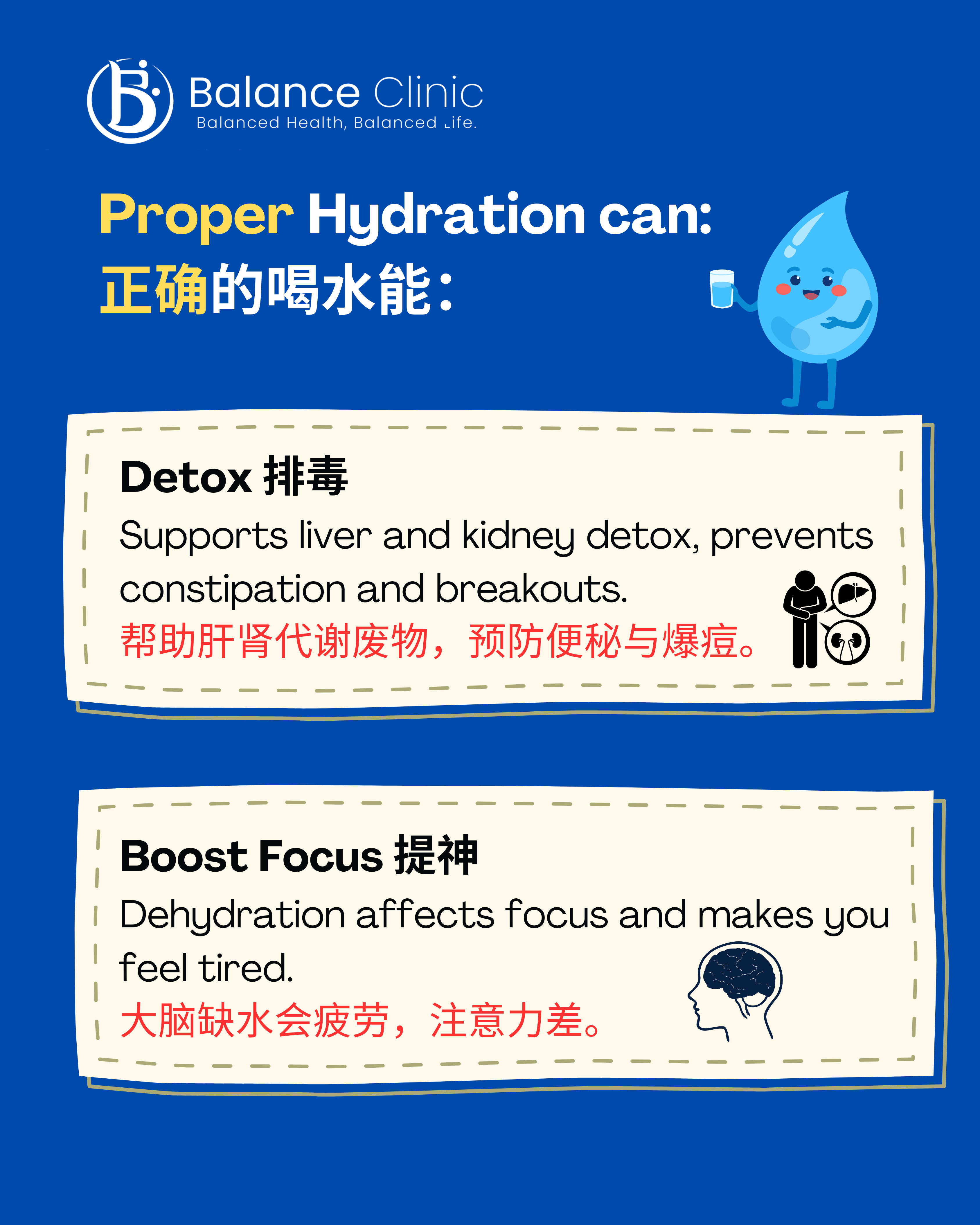
Digestive support: Adequate fluids help support normal bowel movements and can reduce the likelihood of constipation, especially when combined with sufficient dietary fibre.


Kidney function: Water helps the kidneys filter the blood and remove waste products through urine.


Mental performance: Even mild dehydration may contribute to tiredness, headaches, reduced concentration, or difficulty staying alert.


Skin and overall wellbeing: Adequate hydration supports normal skin function and fluid balance, although water alone is not a treatment for acne or other skin conditions.


Sometimes feeling unusually tired or unfocused may simply be a reminder to check whether you have been drinking enough.

Hydration Supports Everyday Body Functions

Your body depends on water to maintain many essential functions.


Metabolism & Energy

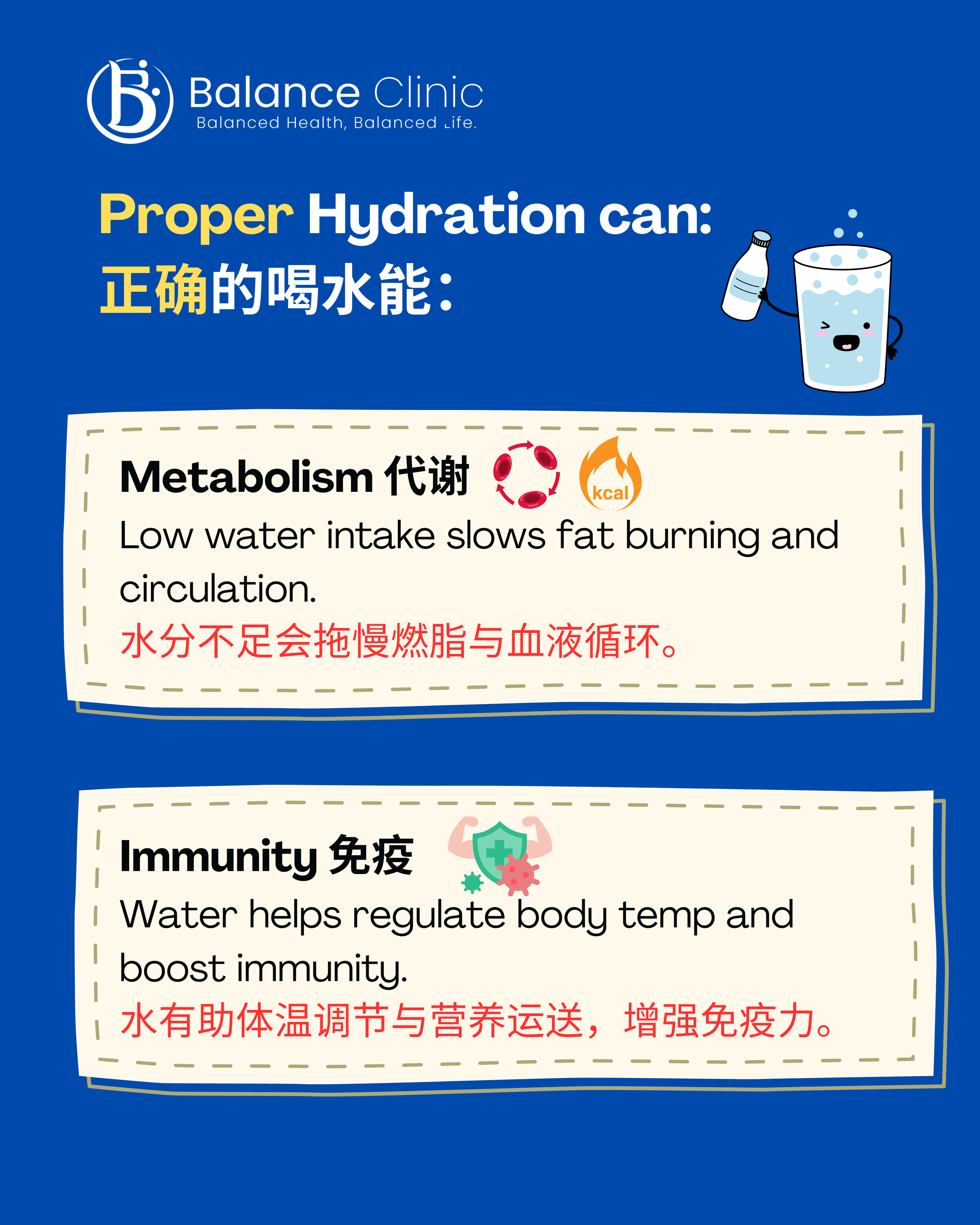
Water supports the chemical reactions involved in converting nutrients into usable energy. Staying hydrated may also help you feel more energetic during daily activities and exercise.


Temperature Regulation

Sweating helps regulate body temperature, especially during exercise or in Malaysia’s hot and humid weather. Fluids lost through sweat need to be replaced.


Nutrient Transportation

Water is an important part of blood and body fluids, helping nutrients travel to tissues throughout the body.


Immune Function

Hydration supports normal circulation and the healthy function of mucous membranes and other body systems involved in immune defence. It is one part of maintaining overall health rather than an “immune booster” on its own.

How Much Water Do You Actually Need?

There is no single amount that is perfect for everyone.


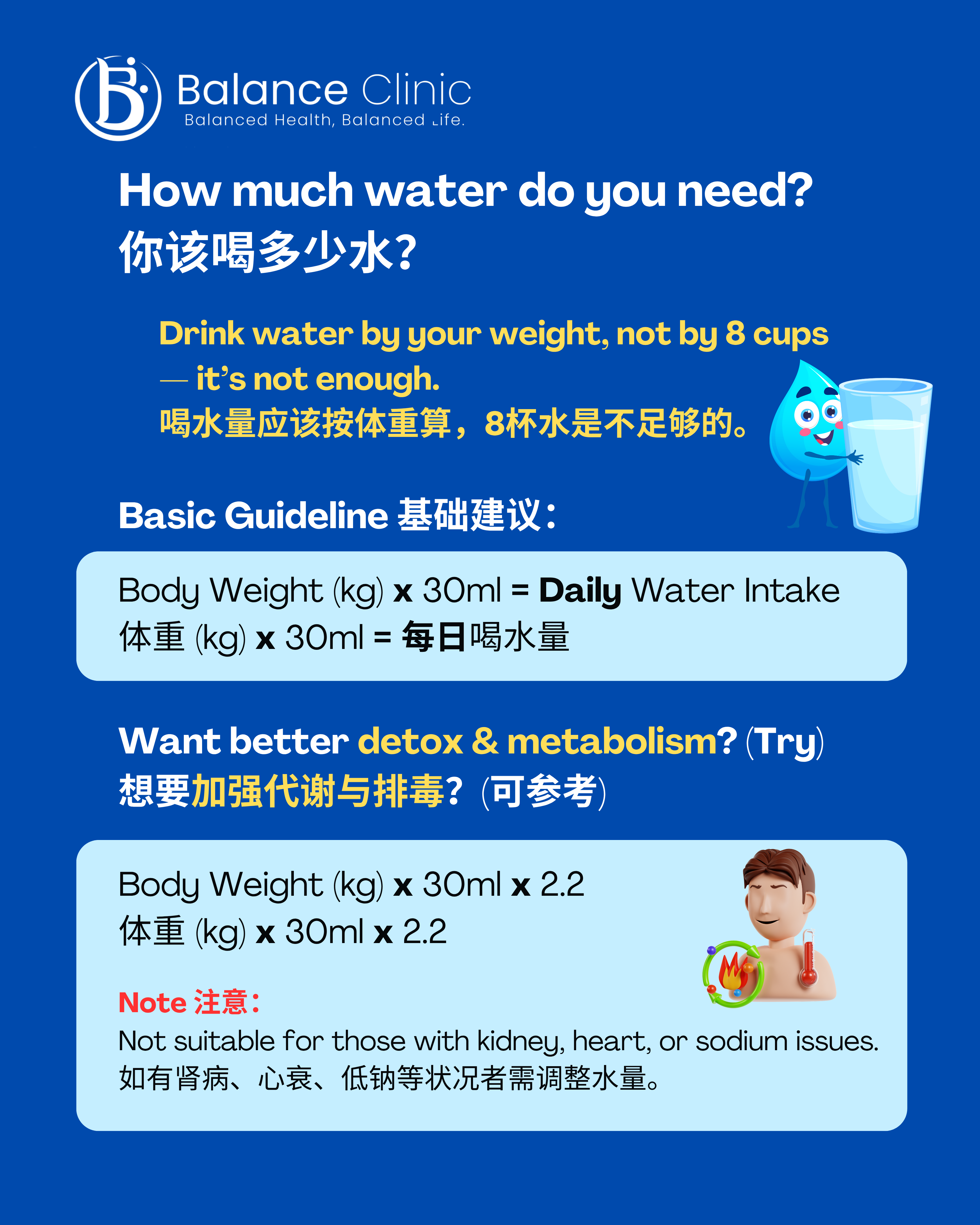
A commonly used general starting point is approximately:

  • Body weight (kg) × 30 mL per day


For example, someone weighing 60 kg may start around:

  • 60 × 30 mL = 1,800 mL per day


As a general guideline, daily water intake should not exceed 4 litres unless advised by a healthcare professional.

However, your actual fluid needs can change depending on:

  • Exercise and sweating
  • Hot or humid weather
  • Pregnancy or breastfeeding
  • Diet and salt intake
  • Fever, vomiting or diarrhoea
  • Medications
  • Kidney, heart or other medical conditions


Rather than aggressively increasing water intake, it is better to adjust hydration according to your individual needs. Very high fluid intake is not automatically healthier and may be unsafe for some people.

Smart Hydration Tips

Good hydration is easier when it becomes part of your daily routine.


1. Drink regularly throughout the day
Avoid relying only on thirst, especially when you are busy, exercising, or spending time in hot weather.


2. Start your day with some water
After several hours of sleep, having water in the morning is an easy way to begin replacing fluids.


3. Drink around exercise
Hydrate before and after physical activity, and replace additional fluids when you sweat heavily.


4. Water should be your main drink
Plain water is generally a better everyday choice than sugar-sweetened beverages. Coffee and tea can still contribute to daily fluid intake, but watch added sugar and excessive caffeine.


5. There is no need to completely avoid water after meals
Drinking a normal amount of water with or after food generally does not “stop digestion.” If large amounts make you feel bloated or uncomfortable, simply spread your intake throughout the day.


6. Use your body as a guide
Persistent thirst, very dark urine, headaches, dry mouth, or unusual fatigue may suggest that you need to pay more attention to hydration.


Benefits of Proper Hydration

Staying adequately hydrated can support:

  • Normal energy and metabolic function
  • Concentration and mental performance
  • Healthy digestion and bowel movements
  • Kidney function and waste removal
  • Circulation and nutrient transportation
  • Normal muscle function and exercise performance
  • Body temperature regulation
  • Healthy fluid balance


Hydration is simple, but it is one of the foundations that many other healthy habits depend on.

The Balance Clinic Approach

At Balance Clinic, we believe hydration should be personalised rather than reduced to a fixed number of glasses per day.


We consider factors such as your body composition, activity level, lifestyle, diet, medical history and individual health needs when providing nutrition and hydration guidance.


Assessments such as body composition analysis can also provide useful information about body water distribution, allowing hydration strategies to form part of a broader, personalised approach to nutrition, metabolism and overall wellbeing.


The goal is not simply to drink more water — but to understand what your body actually needs.

Final Thoughts

Water may seem simple, but proper hydration plays an important role in how your body functions every day.


Instead of focusing on a rigid “8 glasses a day” rule, aim for consistent, appropriate hydration that matches your body, lifestyle and environment.


Small habits — keeping water nearby, drinking regularly throughout the day, and replacing fluids after sweating — can make healthy hydration much easier to maintain.


Drink enough. Drink consistently. And most importantly, drink according to what your body needs.